The Debrief That Actually Ships: A 45-Minute Triage for Finished Campaigns

Campaigns rarely end with a clean finish line. They end with a Slack thread, a dashboard someone screenshotted, three opinions about the creative, and a nagging feeling that everyone learned something but nobody wrote it down. Then the next brief starts, and the same questions come back: Why did we do that? Who owned that handoff? Did we ever fix the landing page?
A 45-minute debrief can change that, but only if it is built like a working session instead of a performance review. The goal is not to relitigate every decision. The goal is to leave with a short list of decisions that make the next campaign easier to run.
Stop calling it a postmortem
Postmortem sounds like an autopsy. Victory lap sounds like a party. Blame session sounds like a Tuesday. None of those formats reliably produce a better brief.
Try calling it a campaign triage instead. You are sorting what happened into three buckets, then deciding what to do with each bucket before the quarter gets away from you. That framing keeps the room honest without making it heavy. It also gives quiet team members a job: sort evidence, not defend turf.
The three-column sort
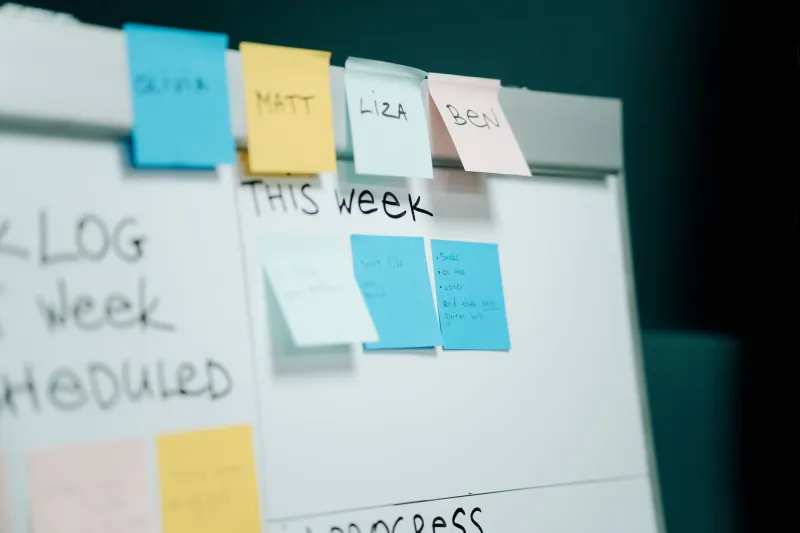
Put three columns on a whiteboard or a shared doc: what compounded, what leaked, and what to retire.
What compounded is anything that got stronger the more people touched it. A founder video that sales kept sending. A landing page section that support started linking to. A creator hook that showed up in organic comments without prompting. These are repeatable assets, not lucky breaks.
What leaked is where momentum escaped. Slow approvals. A confusing handoff between media and creative. A promo code that did not match the ad. A form that added friction for mobile users. Leaks are not automatically failures. They are usually process clues.
What to retire is the hardest column because it asks the team to give something up. A visual treatment that looked good in the deck but did not earn clicks. A channel that consumed budget and attention without moving recall. A phrase the team loves but the audience ignores. Retiring things is how you make room for the next test.
Every item needs evidence. Not a feeling, not a pet theory, not the loudest person's memory. A screenshot, a metric, a customer comment, a sales note, a timeline. If the evidence is thin, mark it as a hypothesis and move on.
A 45-minute agenda that fits a real workday
0 to 5 minutes: Set the frame. Name the campaign, the goal, and the rules. No slide deck. No scoring the team. One facilitator keeps time and writes decisions.
5 to 15 minutes: What compounded. Go around the room and collect repeatable wins. Ask for evidence after each claim. Group duplicates.
15 to 25 minutes: What leaked. List friction points in the order they happened, not in order of who is responsible. Keep the language neutral: the approval step added four days, the mobile form lost people, the UTM naming slowed reporting.
25 to 32 minutes: What to retire. Pick the obvious cuts first. Then challenge one beloved tactic. If the room cannot agree, assign a small test instead of forcing a verdict.
32 to 40 minutes: Pick three moves. Choose no more than three actions for the next campaign. One keep, one fix, one cut. More than three and nothing ships.
40 to 45 minutes: Assign owner and date. Every move gets one owner, one due date, and one place it lands in the next brief. If it does not have an owner, it is not a decision. It is a wish.
Facilitation prompts that keep it honest
Use these when the room drifts into storytelling or defensiveness:
- Where did results beat the brief, and what made that possible?
- Where did a handoff add time we did not plan for?
- What did we have to explain twice to the same audience?
- Which asset did sales or support reuse without being asked?
- What would we cut first if we had half the budget?
- What are we pretending not to know?
- If we ran this again next month, what is the first thing we would change?
- Who needs this lesson most, and how do we get it into their brief?
The facilitator should not solve every issue in the room. Capture it, assign it, and move on. A tight debrief is not a workshop. It is a sorting station.
Turn the notes into next quarter's brief
The output should be one page, not a 20-slide recap. Use a decision log with six columns: decision, bucket, owner, due date, evidence, and where it lands in the next brief.
| Decision | Bucket | Owner | Due | Evidence | Next brief section |
|---|---|---|---|---|---|
| Keep the founder explainer as a core proof asset | Compounded | Content lead | Next kickoff | Sales reuse notes and watch time | Proof assets |
| Fix mobile form drop-off before the next promo | Leaked | Web lead | Two weeks | Session recordings and form analytics | Conversion path |
| Retire the broad-match display test | Retire | Media lead | Next planning cycle | Spend and recall check | Channel plan |
The magic is not the template. It is the rule around it: no decision without an owner, and no owner without a date. At the next kickoff, open the log before opening the new brief. Read the three moves out loud. Then write the brief with those moves already baked in.
Make the ritual stick
Schedule the debrief within five business days of the campaign wrapping. Invite the people who did the work, not just the people who approved it. Rotate the facilitator so no one person becomes the permanent judge. Store the log in the same place as your briefs, with a name that future-you can find.
Most importantly, treat the debrief as part of the campaign, not an extra meeting after it. The teams that get better every quarter are not the ones with the longest recaps. They are the ones with the shortest list of decisions that actually made it into the next brief.